Add Your Heading Text Here
Lorem ipsum dolor sit amet, consectetur adipiscing elit. Ut elit tellus, luctus nec ullamcorper mattis, pulvinar dapibus leo.
Introduction: The shift from phishing to AI-enabled impersonation
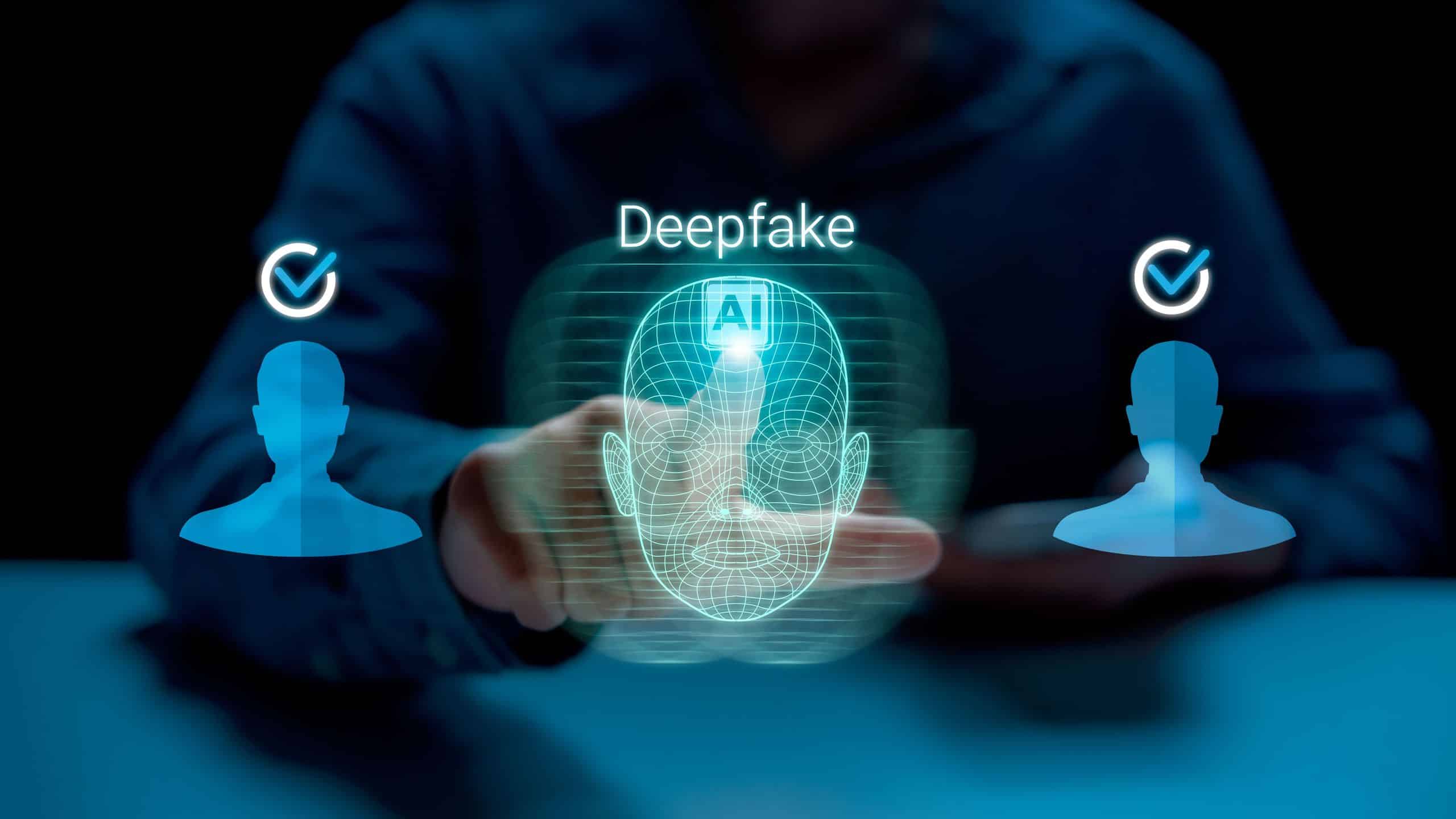
Generative AI has fundamentally changed how social engineering attacks are executed. In 2026, healthcare organizations are no longer facing only poorly written phishing emails. Attackers are now deploying AI-generated vendor communications, synthetic invoices, and deepfake voice impersonations of executives and clinical leadership.
These attacks are faster to produce, highly personalized, and designed to bypass traditional awareness training. Because healthcare environments rely on rapid approvals, distributed care teams, and trusted vendor relationships, they present a uniquely attractive target profile.
The impact extends beyond financial loss. AI-driven business email compromise can expose HIPAA Security Rule gaps, identity verification weaknesses, audit documentation failures, and incident response immaturity.
Healthcare cybersecurity governance must evolve accordingly.
The 2026 healthcare threat landscape: AI-powered social engineering
Recent cybersecurity outlook reports entering 2026 consistently identify AI-enhanced phishing and impersonation as the fastest-growing attack vector. The shift is not incremental. It is structural.
AI now enables attackers to:
- Generate context-aware phishing emails using scraped provider data
- Replicate executive voice patterns for voicemail-based authorization fraud
- Create realistic invoice change requests aligned to real vendor relationships
- Mimic tone, writing style, and clinical terminology
- Launch high-volume campaigns with near-zero grammatical errors
Traditional red flags are disappearing.
Healthcare environments are particularly vulnerable due to:
- Time-sensitive decision-making
- Distributed workforce models
- Multi-location operations
- External billing vendors
- Third-party IT integrations
- Shared credential environments
Attackers understand that healthcare leaders prioritize operational continuity. AI-enhanced impersonation exploits that pressure.
How deepfake executive impersonation works in healthcare
Deepfake-enabled attacks often follow a predictable pattern:
Reconnaissance
Publicly available executive interviews, webinars, or social media posts are used to train synthetic voice models.
Pretext development
Attackers study vendor relationships and payment cycles.
Urgency trigger
A voicemail or email is sent impersonating a CFO, CEO, or clinical director authorizing a time-sensitive wire transfer or invoice update.
Approval workflow exploitation
Mid-level finance or administrative staff execute payment changes under perceived executive authority.
Audit confusion
After discovery, organizations struggle to determine whether access controls, policy enforcement, or employee action caused the breach.
The sophistication of AI-generated impersonation reduces hesitation and increases compliance with fraudulent instructions.
HIPAA security rule implications
AI-driven business email compromise is not simply a financial event. It introduces direct compliance exposure under the HIPAA Security Rule.
Areas of concern include:
Access control (§164.312(a))
If impersonation leads to unauthorized system access or credential sharing, access control safeguards may be scrutinized.
Audit controls (§164.312(b))
Organizations must demonstrate logging and monitoring of authentication activity, email changes, and system modifications.
Workforce security (§164.308(a)(3))
Deepfake impersonation may expose gaps in workforce identity verification procedures.
Security incident procedures (§164.308(a)(6))
Organizations must show documented response plans, containment steps, and mitigation strategies.
An AI-enabled impersonation incident may trigger:
- OCR investigations
- Mandatory breach notifications
- Business associate review
- Insurance carrier scrutiny
Healthcare cybersecurity must be viewed through regulatory maturity, not only technical controls.
Why traditional phishing training is no longer sufficient
Security awareness training remains necessary but is no longer sufficient.
AI-generated impersonation:
- Removes grammar mistakes
- Replicates executive tone
- Uses legitimate invoice details
- Aligns with real vendor names
- Occurs across voice, video, and email channels
Healthcare organizations relying solely on:
- Annual phishing simulations
- Basic MFA deployment
- Informal approval workflows
may face structural exposure.
The issue is governance maturity, not employee failure.
Operational gaps healthcare organizations must evaluate
In 2026, healthcare IT leadership should assess:
Executive verification protocols
Is there a documented secondary authentication requirement for wire or invoice modifications?
Privileged access management
Are finance and billing system permissions segmented and monitored?
Email authentication controls
Are DMARC, DKIM, and SPF properly configured and enforced?
Vendor change validation
Is there a call-back verification policy before vendor banking changes?
Incident documentation procedures
Can the organization produce a structured timeline and forensic summary within 72 hours?
Cybersecurity governance alignment
Is risk analysis documented and updated annually?
AI-driven impersonation often exposes weaknesses in process, not technology.
How In-Touch IT supports healthcare organizations
Healthcare cybersecurity must integrate operational controls with compliance documentation. A reactive posture is insufficient.
In-Touch IT provides structured cybersecurity governance aligned to regulated healthcare environments, including:
- Risk assessment and vulnerability analysis
- Access control review and remediation
- Email security configuration validation
- Privileged account monitoring
- Incident response planning and documentation workflows
- Ongoing security monitoring and log review
- Regulatory mapping aligned to HIPAA safeguards
Because healthcare is a regulated environment, cybersecurity must be integrated into compliance management, not treated as a separate IT function.
Healthcare organizations operating across multiple states require consistent governance standards, audit readiness, and documented control maturity.
AI-enhanced social engineering reinforces the need for structured oversight.
The cost of inaction in 2026
AI-driven impersonation risks include:
- Financial wire loss
- EHR access exposure
- Patient data breach notification
- OCR audits
- Increased cyber insurance premiums
- Operational disruption
- Reputational damage
Healthcare organizations must evaluate not only technical defenses but documentation maturity and response readiness.
Cybersecurity posture is now inseparable from regulatory posture.
Governance strategy for 2026
Healthcare cybersecurity leaders should consider:
- Formalizing executive impersonation response procedures
- Updating wire transfer verification policies
- Expanding log monitoring visibility
- Conducting tabletop exercises focused on deepfake scenarios
- Reassessing vendor risk management frameworks
- Reviewing identity access governance policies
- Updating HIPAA risk assessments to include AI-driven threats
The objective is control maturity and audit defensibility.
Frequently asked questions
Are deepfake attacks actually affecting healthcare organizations?
Yes. AI-generated impersonation has been documented across industries, and healthcare environments are considered high-value targets due to financial transactions and sensitive data access.
Does MFA prevent AI-driven business email compromise?
MFA reduces credential theft risk but does not prevent executive impersonation fraud involving social engineering and approval workflow manipulation.
Is AI-driven phishing considered a HIPAA breach?
It depends on whether protected health information was accessed, altered, or disclosed. Organizations must conduct a documented risk assessment following any suspected incident.
Should healthcare organizations change financial approval processes?
Yes. Secondary authentication protocols and documented callback verification procedures are increasingly recommended.
Can small healthcare practices be targeted?
Yes. Small and mid-sized providers are often targeted because financial controls may be lighter and IT oversight limited.
Strengthening healthcare cybersecurity governance
AI-driven impersonation is not a temporary trend. It reflects a permanent shift in attacker capability.
Healthcare organizations must move beyond reactive phishing awareness toward:
- Process maturity
- Access governance
- Identity verification controls
- Documented compliance alignment
- Continuous monitoring
Cybersecurity and regulatory posture must evolve together.
Organizations seeking to assess their exposure to AI-driven social engineering should begin with a structured cybersecurity risk evaluation aligned to healthcare compliance requirements.
What should healthcare organizations do next?
Healthcare leaders do not need to become artificial intelligence experts. However, they should evaluate whether their current cybersecurity and compliance safeguards account for AI-driven impersonation risk.
In 2026, that means reviewing three areas:
- Whether financial approval and executive verification workflows include secondary authentication controls
- Whether access controls, audit logging, and monitoring processes are mature and documented
- Whether incident response procedures account for impersonation and deepfake scenarios
AI-enabled social engineering does not require entirely new frameworks. It requires disciplined execution of existing safeguards and clear governance oversight.
How In-Touch IT supports healthcare organizations
In-Touch IT provides structured cybersecurity governance for healthcare environments operating under HIPAA Security Rule requirements.
We help organizations:
- Conduct documented cybersecurity risk evaluations
- Review executive and financial approval workflows
- Validate email authentication configurations
- Strengthen access control and monitoring safeguards
- Align incident response planning with regulatory expectations
Our focus is not fear-based marketing or one-time assessments. It is operational maturity, documentation readiness, and sustainable compliance alignment.
Healthcare organizations operating across multiple locations or states require consistent governance standards and defensible audit posture. That is where structured oversight matters most.
Considering a risk review?
If your organization has not recently evaluated how AI-driven impersonation could impact financial approvals, executive communications, or compliance documentation, it may be appropriate to conduct a structured cybersecurity risk review.
In-Touch IT offers healthcare-focused cybersecurity consultations designed to identify practical control gaps and governance improvements. The goal is clarity, not alarm.
Organizations that proactively evaluate impersonation risk now are better positioned to enter 2026 with stronger operational resilience and regulatory confidence.
To begin a conversation, contact In-Touch IT to schedule a cybersecurity governance review aligned to healthcare compliance requirements.